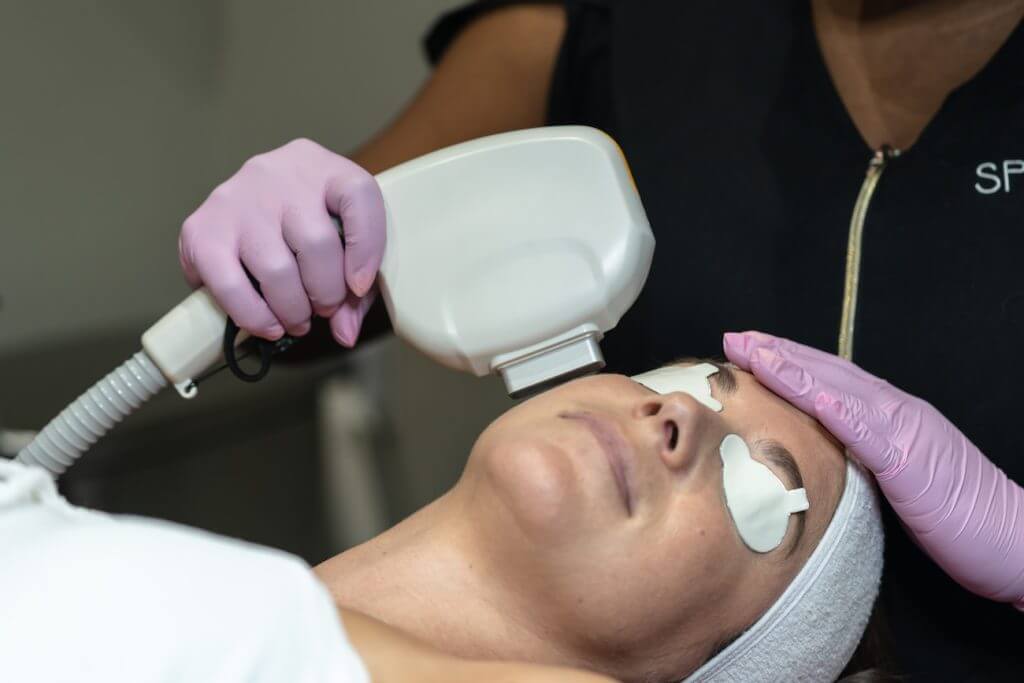
| Quick answer: IPL vs BBL is a category versus a specific device. IPL (intense pulsed light) describes many broad-spectrum light machines. BBL (BroadBand Light) is one branded platform made by Sciton. Both are used for sun spots, redness, and uneven tone. The practical differences are control, cooling, and consistency, and the best choice depends on the device, your skin, and the provider. |
You have probably seen both terms on clinic menus around Fayetteville and Northwest Arkansas, and many people assume they are the same thing. They are related, but not identical. At Rejuvenated, A Well Labs+ Medspa, we use BBL HEROic & MOXI for color and texture concerns, so we are often asked which is better. This guide explains IPL vs BBL in plain language, including where the honest answer is “it depends.”
What Is IPL?
IPL stands for intense pulsed light. Instead of a single-wavelength laser, an IPL device flashes a broad range of light onto the skin. Pigment and tiny blood vessels absorb that light and turn it into heat, which the body then clears over the following days and weeks.
IPL is a category, not one machine. It describes a type of technology rather than a specific device, so results depend on the system and settings used. According to UC Health, IPL photofacials are commonly used for sun damage, brown spots, small capillaries, and rosacea-type redness.
What Is BBL?
BBL stands for BroadBand Light. It is Sciton’s branded platform, and it also uses broad-spectrum light to target pigment and vessels. Sciton describes it as offering a wide wavelength range with filters that providers combine for each session, plus integrated cooling for comfort, according to Sciton.
In other words, BBL belongs to the same family as IPL. What is different is the system around the light: how finely a provider can adjust wavelengths and filters, how the skin is cooled, and how evenly energy is delivered.
IPL vs BBL: Side by Side
| IPL | BBL | |
| What it is | A broad category of pulsed-light devices | A specific branded platform (Sciton) |
| Light | Broad-spectrum pulses, range varies by machine | Broad-spectrum light with provider-selected filters |
| Customization | Varies a lot by device | Adjustable filters and settings |
| Cooling | Varies by device | Integrated cooling in the handpiece |
| Commonly treats | Sun spots, redness, visible vessels, tone | Sun spots, redness, visible vessels, tone, early photoaging |
| Typical downtime | Mild redness, sunburn-like feeling | Mild redness, warmth, spots may darken before fading |
| Evidence | Studied across many devices, so results vary by system | Sciton cites clinical research; head-to-head comparisons with other IPL devices are limited |
What Both Can Treat
In the IPL vs BBL conversation, both approaches are most often used for:
- Sun spots and age spots
- Facial redness and small visible vessels
- Uneven skin tone and early sun damage
- A fresher, more even look on the face, neck, chest, and hands
If dark spots are your main concern, our guide to sun spot and age spot treatment explains what to expect. For persistent redness, see facial veins and redness.
What They Cannot Do
Light-based treatments work on color, not on loose skin or deep lines. They are not a lift, and they do not replace surgery. If your concern is laxity or texture, other options may fit better, and our comparison of Sofwave vs RF microneedling is a good place to start. Melasma needs special care because heat can worsen it, so it should be assessed in person before any light treatment.
Is BBL Better Than IPL?
Here is the honest answer. Manufacturers and clinics say BBL offers more control, cooling, and consistency than many traditional IPL machines, and those features can matter for comfort and precision. But the manufacturer page we reviewed does not cite head-to-head studies against IPL, and IPL devices vary widely. A skilled provider using a quality IPL can outperform a poorly used advanced machine.
So when comparing IPL vs BBL, do not choose by name alone. Ask which exact device is used, who performs the treatment, and how settings are chosen for your skin.
Who Should Wait
Light treatments are not right for everyone. Your provider may advise waiting if you have a recent tan or sunburn, are pregnant, are taking isotretinoin, have an active skin infection or cold sore in the area, or are prone to melasma. Skin tone matters too, because deeper skin tones and tanned skin carry a higher risk of pigment changes with light-based devices. That is why an in-person assessment is essential. Tretinoin and some exfoliating products may also need to be paused before treatment, so tell your provider everything you use.
What to Expect: Sessions and Aftercare
Most plans use a series of treatments. For BBL HEROic, we typically plan about three sessions spaced roughly three weeks apart, though your provider will tailor the schedule. Each visit usually takes about 20 to 30 minutes.
Afterward, expect warmth like a mild sunburn. Dark spots can darken first and then fade over the following weeks, which is normal. Avoid direct sun for 72 hours and wear SPF 50 or higher. Makeup is usually fine after a day or two. Whichever side of IPL vs BBL you land on, results build gradually and vary from person to person.
Why Fall and Winter Are Popular
Because light treatments work best on skin without a fresh tan, many people schedule them when sun exposure is lower. Fall and winter in the Ozarks make that easier. Daily sunscreen afterward matters in every season. If you also want a deeper refresh, read our overview of laser resurfacing options and laser aftercare.
Where BBL HEROic & MOXI Fits
BBL HEROic treats color. MOXI is a separate fractional laser that treats texture. Together they address both, which is why many patients choose a combined plan, such as several MOXI sessions plus one or two BBL sessions. Treatments are medically directed by licensed, credentialed providers and overseen by Dr. Nick Gentry, a board-certified emergency medicine physician with training in functional, aesthetic, and regenerative medicine.
Choosing a Provider in Fayetteville and Northwest Arkansas
Whether you live in Fayetteville, Springdale, Rogers, Bentonville, or Lowell, ask a clinic these questions before you book: Which device do you use? Who performs the treatment? How do you choose settings for my skin tone? What are the risks, and what should I avoid before and after? Clear answers matter more than any brand name.

IPL vs BBL FAQs
Is BBL the same as IPL?
Not exactly. BBL is a specific branded broadband light platform, while IPL is a broad category. They use similar broad-spectrum light but differ in control, cooling, and design.
Which is better for sun spots, IPL or BBL?
Either can work, depending on the device and provider. Your skin tone, the type of spot, and the settings matter more than the label.
Does one hurt more than the other?
Both usually feel like a warm snap or mild sunburn. Cooling in the handpiece can improve comfort, and sensitivity varies by person.
How many sessions will I need?
Most plans use a series of about three, spaced a few weeks apart. Your provider will tailor this to your goals.
Can I get IPL or BBL in the summer?
It is possible only if your skin has no recent tan. Many people choose fall and winter, and sunscreen is essential year-round.
How much does BBL cost in Fayetteville, AR?
Cost depends on the area treated and the plan your provider recommends. We offer affordable pricing options, call for details. Financing is also available through Cherry and CareCredit to help make treatment accessible.
Ready to Talk Through Your Options?
If you are weighing IPL vs BBL, we can help you decide what fits your skin. Visit us at 1438 E. Augustine Suite 2, Fayetteville, AR 72703, call (479) 335-5777, or request a consultation. Results vary, and this article is educational, not medical advice.